Somewhere between work schedules, phones, and the general noise of daily life, it’s easy for a couple to end up existing side by side without really connecting.
You share a home, a routine, maybe even a bed, but real conversation somehow keeps getting pushed to “later.”
If that feels familiar, a Couples Wellness Retreat in Sedona offers something most date nights can’t: real, uninterrupted space to slow down together.
Sedona has built a reputation as one of the country’s most well-known wellness destinations, and increasingly, couples are discovering it as a place to reconnect rather than just relax.
This guide walks through what a couples wellness retreat actually looks like here, how it differs from a typical getaway, and how experiences like Harmonic Egg Sedona sessions can become a meaningful part of your time together.
Quick Answer
A Couples Wellness Retreat in Sedona combines the area’s natural scenery with intentional, shared wellness experiences designed to help couples slow down and reconnect.
Activities often include shared meditation, hiking, spa treatments, and relaxation-focused sessions like Harmonic Egg Sedona. It’s meant to support connection and quality time, not replace professional couple therapy retreat programs or licensed counseling.
Why Sedona Works So Well for Couples
Sedona’s dramatic red rock scenery and quiet desert stillness create a natural backdrop for slowing down together.
Unlike a busy city break filled with restaurants, shows, and constant stimulation, Sedona invites a different pace, one built around presence rather than packed schedules.
There’s a reason so many couples describe the drive into town, surrounded by towering red formations, as the moment they finally start to exhale.
The area’s long-standing reputation for holistic wellness also means couples have easy access to a wide range of shared experiences, from spa treatments to meditation, without needing to search far to find them.
That concentration of options is part of what makes planning a couples wellness retreat here so much simpler than trying to build one from scratch elsewhere, where you might have to travel across a whole city just to string together a similar itinerary.
What Makes This Different From a Typical Getaway
A typical couples getaway often revolves around sightseeing, dining, or entertainment.
A wellness retreat flips that structure, prioritizing shared stillness and intentional connection over constant activity. Instead of racing from one attraction to the next, the pace intentionally slows down.
This doesn’t mean doing nothing. It means choosing experiences that create space for real conversation, shared reflection, and quality time without distraction.
Where a regular vacation might be measured by how much you saw, a wellness retreat is often measured by how connected you felt, and by how much of your attention was actually present rather than split between your surroundings and your phone.
Read More: What to Expect During Your First Harmonic Egg Session in Sedona
Building Connection Through Shared Experiences
Connection tends to grow in quiet, shared moments, not just big gestures. A couples wellness retreat leans into this by building an itinerary around experiences you go through together, side by side, rather than simply being in the same place while doing separate things, like scrolling through phones on the same couch.
It’s worth being clear about what this kind of retreat is and isn’t. While many couples find that a wellness-focused trip like this supports their relationship, it’s not a substitute for a structured couple therapy retreat or professional counseling. If you’re navigating deeper relationship challenges, a licensed couples therapist is the right resource.
A wellness retreat works best as a way to nurture connection, not repair it from a serious rupture, and being honest about that distinction upfront helps set the right expectations for your trip.
What to Expect During Your Retreat
While every couple’s retreat looks a little different, a general structure often includes:
- Arrival and settling in: Choosing quiet, retreat-style lodging sets the tone from the start.
- A mix of shared and individual time: Some experiences work well together, while others, like a Harmonic Egg session, may be experienced individually before regrouping to share the experience afterward.
- Unstructured time: Open blocks in your schedule for spontaneous conversation, walks, or simply sitting together.
- A closing reflection: Many couples find it valuable to talk through the trip together before heading home, noticing what felt meaningful.
Shared Harmonic Egg Sessions: A Unique Way to Reconnect
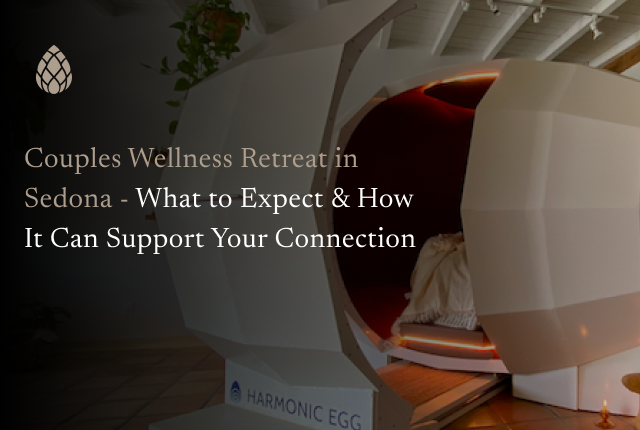
Many couples build a Harmonic Egg session into their retreat as a shared point of stillness. While the sessions themselves are typically experienced individually, inside a private, enclosed chamber, couples often schedule their sessions back-to-back or on the same day, then come together afterward to talk about the experience.
This creates a natural rhythm: individual stillness followed by shared reflection. Many couples describe this combination, quiet personal relaxation paired with a conversation afterward, as one of the more meaningful parts of their retreat.
It offers something a typical couples massage doesn’t: a few minutes to sit with your own thoughts before reconnecting with your partner, rather than being in the same room the entire time.
Comparing notes afterward, what each of you noticed, felt, or thought about during your own session, often becomes a genuinely interesting conversation. It’s a small ritual, but one that many couples say adds a layer of intimacy that a purely shared activity doesn’t offer in quite the same way.
Other Wellness Activities to Share as a Couple
Beyond Harmonic Egg sessions, Sedona offers plenty of ways for couples to build a shared wellness itinerary:
- Couples massage or spa treatments, offered at many local wellness studios
- Guided meditation or breathwork classes, often available for pairs or small groups
- Gentle hiking trails, especially those known for sunrise or sunset views
- Journaling prompts for couples, which some retreats build into quiet mornings or evenings
- Shared meals at farm-to-table restaurants, giving you a relaxed setting for conversation
Pro Tip: Try alternating between shared activities and brief individual time. Giving each other a little personal space during the retreat often makes the shared moments feel more intentional.
Planning Your Itinerary Together
Planning the retreat itself can become part of the connection-building process. Sitting down together beforehand to talk through what each of you hopes to get out of the trip, rest, adventure, deeper conversation, or simply time away, helps set expectations before you arrive.
A simple way to structure your days:
| Time of Day | Focus |
| Morning | Movement, like a gentle hike or walk |
| Midday | Individual wellness time, such as a Harmonic Egg session |
| Afternoon | Shared reflection or a quiet activity together |
| Evening | Relaxed meals and unstructured conversation |
Best Time of Year to Visit
Sedona is a year-round destination, though each season offers a slightly different experience for couples:
- Spring and fall bring mild weather, ideal for outdoor activities together.
- Summer works well for couples who prefer quieter, indoor-focused wellness experiences during the hottest part of the day.
- Winter offers a cooler, quieter version of the town, often appealing to couples looking for a more introspective, low-key retreat.
Practical Tips for Couples
A few planning tips can help your retreat run smoothly:
- Book shared experiences in advance, especially during busier travel seasons.
- Choose lodging that supports quiet time together, rather than a busy resort atmosphere.
- Avoid overpacking your schedule. Leaving open space is often what makes the retreat feel different from a typical trip.
- Talk about expectations beforehand, so you’re both on the same page about the pace of the trip.
- Put phones away during key moments. Even a few phone-free hours a day can make shared time feel noticeably more present.
Frequently Asked Questions
Is a couples wellness retreat the same as couples therapy?
No. It’s a wellness-focused experience meant to support connection, not a substitute for a structured couple therapy retreat or licensed counseling.
How long should a couples retreat be?
Three to five days is common, giving enough time to settle into a slower pace without feeling rushed.
Do we need to do every activity together?
Not necessarily. Many couples find a mix of individual experiences, like separate Harmonic Egg sessions, and shared time works best.
Is Sedona good for couples who aren’t experienced with wellness practices? Yes. Most experiences, including Harmonic Egg sessions, are beginner-friendly and require no prior experience.
What if we’re dealing with a serious relationship issue?
A wellness retreat can support connection, but a licensed couples therapist is the appropriate resource for deeper relationship challenges.
Can we book a Harmonic Egg session together in the same chamber?
Sessions are typically experienced individually, though many couples schedule theirs back-to-back on the same day.
Conclusion
A Couples Wellness Retreat in Sedona offers something increasingly rare: real, unhurried time to reconnect, supported by a destination built around stillness and intention.
Whether it’s a shared hike, a quiet dinner, or individual Harmonic Egg sessions followed by a conversation together, the goal is simple: less noise, more presence, and a little more attention paid to each other than your daily routine usually allows.
If you’re ready to start planning, consider exploring Harmonic Egg sessions for your trip, learning more about Harmonic Egg Sedona, or reaching out with questions about building your itinerary. When you’re ready, your retreat is simply a few bookings away.


